Picture this: you’re scrolling through sun‑kissed photos of the Costa del Sol, sipping coffee, and a little voice whispers, “What if that beach house could be mine?”
That feeling is real for many Americans dreaming of a second home in Spain, but the paperwork and cultural quirks can feel like a maze.
So, how do you actually buy property in Spain as an American without losing sleep over legal jargon or currency exchange headaches?
First, know you’re not alone. Hundreds of expats make the jump each year, and most end up smiling on their balcony, watching the Mediterranean glow.
Here’s the good news: the process is straightforward once you break it into bite‑size steps. You’ll need a Spanish NIE (tax identification number), a solid budget that accounts for purchase price, taxes, and fees, and a trustworthy local agent who speaks your language.
Think about it this way: getting the NIE is like getting your passport to the Spanish property market. It unlocks everything—from opening a bank account to signing the deed.
And don’t forget the hidden costs. You’ll pay around 10 % of the purchase price in taxes and legal fees, plus ongoing expenses like community fees and property tax.
But here’s a tip most guides skip: set aside a small “buffer” fund for unexpected repairs or seasonal maintenance. Trust me, a leaky tap in the middle of summer is way more stressful than budgeting for it ahead of time.
Now, imagine you’ve found a charming apartment in Marbella. You’ve got your NIE, a mortgage pre‑approval, and a local solicitor ready to review the contract. The next step is the “arras” deposit—usually 10 % of the price to secure the deal.
Does this sound doable? Absolutely. By tackling each piece one at a time, the whole journey feels less like a sprint and more like a relaxed stroll along the promenade.
Ready to turn that day‑dream into a deed? Let’s dive in and walk through every stage, from scouting neighborhoods to holding the keys in your hand.
Buying a Spanish home as an American is easier when you follow clear steps: get your NIE, arrange financing, choose a local agent, and budget for taxes.
Follow our guide and you’ll go from dreaming on the Costa del Sol to holding the keys in just a few confident months.
Imagine you’re sitting on a balcony in Marbella, the sea breeze nudging the paper you just crunched – the numbers that will decide whether that view becomes yours. It’s a mix of excitement and a little dread, because without a solid budget you’ll end up chasing a dream that slips through your fingers.
First, add up every cost you can actually see. The asking price is just the tip of the iceberg; you’ll also need to cover the 10 % transfer tax (Impuesto de Transmisiones Patrimoniales), notary fees, registration fees, and a 1–2 % legal fee if you hire a solicitor. Then factor in mortgage costs, which in Spain typically range from 2.5 % to 4 % APR for non‑resident buyers.
Next, decide how much of that total you’ll fund with cash versus a loan. Most American buyers secure a Spanish mortgage through a local bank after getting a pre‑approval in the U.S. If you have strong credit, you might qualify for a loan covering up to 70 % of the purchase price. Otherwise, be prepared to bring a larger down‑payment – think 30 % to 40 %.
Don’t forget the currency angle. Fluctuations between the euro and the dollar can add a few thousand euros to your bill. Many buyers open a Spanish bank account and lock in the exchange rate with a forward contract, or they use a specialist currency‑exchange service that offers better rates than your regular bank.
Spanish banks often require a NIE, proof of income, and a Spanish bank account before they’ll consider your application. If you already have a U.S. mortgage pre‑approval, bring that document along – many lenders view it as a strong signal of creditworthiness. Alternatively, you can work with an international mortgage broker who knows both markets and can negotiate better rates, especially if you’re buying a second‑home rather than an investment property.
Now, build a buffer. A rule of thumb is to set aside another 5–10 % of the purchase price for unexpected repairs, seasonal maintenance, or community fees you didn’t anticipate. That way, a leaky faucet in August won’t ruin your vacation vibe.
For a deeper dive into every line‑item, check out our How to Buy Property in Spain: A Practical Step‑by‑Step Guide, which walks you through budgeting, taxes, and financing in plain English.
If taxes feel overwhelming, you might want to explore professional advice. This article on tax relief options for foreign investors explains how a specialist can help you optimize your Spanish tax burden.
And once the keys are in your hand, you’ll probably think about personalizing the space. A reliable contractor can make that dream renovation painless – here’s a handy guide to choosing a maintenance builder that applies just as well to Spanish villas.
Finally, give yourself a realistic timeline – from securing financing to signing the deed can take anywhere from six weeks to three months. Planning ahead helps you avoid rushed decisions and keeps stress levels low.
Actionable tip: Write down a budget spreadsheet tonight. List purchase price, taxes, fees, mortgage interest, exchange‑rate buffer, and a separate “contingency” line. When the total feels realistic, you’ll know exactly how much financing you need and where to look for it.
Now that your budget’s sorted, the fun part begins – picking the spot that feels right for you. Think of it like choosing a coffee shop: you want the vibe, the view, and the price of a latte that matches your wallet.
First, ask yourself what you’ll actually do with the place. Are you chasing daily sunshine for a retirement retreat? A weekend getaway you’ll fly to a few times a year? Or maybe an investment that will rent out to tourists in the high season? Your answer will steer you toward a region and a property type that won’t make you regret the decision later.
Spain’s geography is a patchwork of climates, cultures, and price tags. Here’s a quick feel‑for‑the‑area guide that helps you match lifestyle to location.
| Region | Typical Property Type | Why It Fits |
| Costa del Sol (Marbella, Benalmádena) | Luxury apartments or seaside villas | Hot market, strong rental demand, excellent amenities; perfect for retirees and holiday‑home seekers. |
| Alicante & Costa Blanca (Benidorm, Rojales) | Mid‑range condos or townhouses | More affordable than the Costa del Sol, vibrant expat community, great for first‑time buyers and investors. |
| Madrid & Central Spain | Modern flats or historic townhomes | Higher price per sqm, but strong capital‑growth potential and easy access to cultural life; ideal for work‑related moves. |
Notice how each region leans toward a different property style? That’s not a coincidence – the local market shapes what’s built and what buyers expect.
If you’re picturing a beachfront villa with a private pool, you’re probably looking at higher upfront costs and a longer mortgage term. On the flip side, a compact city apartment can be a smart entry point, especially if you plan to rent it out while you’re not using it.
Think about maintenance, too. A new‑build in a gated community often comes with a management fee that covers landscaping and pool upkeep – a nice “set‑and‑forget” option if you’ll be away many months a year. Older properties in historic towns have charm, but they might need a survey and a bit of renovation budget.
One tip that trips up many Americans: don’t forget the seasonal vibe. A property in the interior, like in Castilla‑La Mancha, will be quiet in summer but could feel isolated if you crave beach life. Conversely, a coastal home might feel cramped in peak tourist season. Align the rhythm of the place with your own calendar.
1. Write down your top three “must‑haves” (e.g., sea view, pet‑friendly, proximity to golf).
2. Rank regions based on climate preference, travel logistics, and community vibe.
3. Match each region to a property type that meets your must‑haves and budget.
4. Use a spreadsheet to compare total cost‑of‑ownership: purchase price, HOA/maintenance fees, and estimated rental yield if you plan to rent.
5. Visit at least two properties in your top region – even a short Airbnb stay can reveal whether the neighborhood feels right.
And remember, you’re not locked in after the first choice. Many buyers start in one area, fall in love with a neighboring town, and pivot before signing the contract. Flexibility is your secret weapon.
One more practical nugget: when you move money across the Atlantic, Wise offers low‑cost transfers at the mid‑market exchange rate, saving you a few hundred euros on a €200,000 purchase according to Wise’s guide for expats. That extra cash can go toward a nicer balcony or a professional survey.
So, what’s your next move? Grab a map, pin the regions that spark joy, and start scrolling listings that match your checklist. The right combination of place and property type will make the rest of the buying journey feel like a sunny stroll rather than a maze.
Okay, you’ve got a price in mind and maybe even a favorite balcony in Marbella – now it’s time to untangle the red‑tape. In Spain, the legal and tax side feels like a separate puzzle, but if you break it into bite‑size pieces it stops being scary.
First thing: you need a Spanish NIE (Número de Identificación de Extranjero). Think of it as your tax ID and the key that opens every door – from opening a bank account to signing the escritura (the public deed). You can get it through a Spanish consulate in the U.S. or, faster, via a local gestor who files the paperwork on your behalf. The whole process usually takes 1‑2 weeks and costs around €60‑€80.
When you’re ready to sign, the notary (notario) will draft the escritura. The notary isn’t a lawyer; they’re a public official who guarantees the contract matches the law. You’ll pay the notary fee – roughly 0.5 % of the purchase price – and then the deed is recorded in the Land Registry (Registro de la Propiedad). That registration is what finally gives you legal ownership.
Tip: always ask the notary for a “copia simple” of the deed. It’s a cheap copy you can keep for your records, and it’s handy when you need to prove ownership to banks or tax authorities.
There are three main taxes that pop up when you buy:
Don’t forget the one‑off registration fee (around €200‑€300) and the solicitor’s fee (about 1 % of the price). All together, you’re looking at roughly 10 %‑12 % of the purchase price in upfront taxes and fees.
As an American, Spain isn’t the only tax authority you’ll answer to. The IRS still wants to know about any foreign real estate you own. You’ll need to file Form 8938 (Statement of Specified Foreign Financial Assets) and, if the combined value of your foreign accounts exceeds $10,000, an FBAR (FinCEN Form 114). Missing these can trigger hefty penalties.
On the flip side, you can claim the Foreign Tax Credit on your US return for the Spanish taxes you actually paid. That credit can offset your US tax bill dollar‑for‑dollar, which is a big relief when the numbers add up.
Sounds like a lot? It is, but you don’t have to do it solo. A good gestor or solicitor can handle the paperwork while you focus on imagining yourself on the balcony with a coffee. And remember, each step you complete brings you closer to that “sold” stamp on the deed.
So, what’s the next move? Grab a checklist, line up a trusted local lawyer, and get that NIE started. Once the numbers are paid and the deed is signed, you’ll officially own a piece of Spain – and the whole process will feel less like a maze and more like a well‑planned road trip.
Now that you’ve got your NIE and a rough budget, the next hurdle is finding the people who actually make the deal happen. Trust me, trying to go solo feels a bit like sailing the Med without a crew – you’ll get there, but the waves are way harder.
First off, a local real‑estate agent who speaks English can translate the market’s slang and keep you from overpaying. They’ll filter listings, arrange viewings, and most importantly, negotiate in Spanish while you relax with a café.
For example, Sarah, an IT consultant from Ohio, thought she’d found a perfect beachfront condo in Marbella for €320,000. Her agent noticed the building’s communal debt wasn’t disclosed in the ad and saved her €12,000 by steering her toward a comparable unit with clear finances.
Agents also know where the expat clusters are, so you end up in a neighborhood that feels like a community, not a ghost town.
A Spanish solicitor does more than read the contract; they run a title search, verify that the seller actually owns the property, and check for any liens or unpaid community fees. Without that safety net, you could inherit a surprise tax bill.
Maria’s story illustrates this. She signed a preliminary agreement on a villa in Estepona, only to discover months later that the previous owner hadn’t paid the IBI for two years. Her lawyer caught the issue early, demanding proof of payment before the notary step, and saved Maria from inheriting a €4,500 debt.
The cost is usually around 1 % of the purchase price, but think of it as insurance that protects the 90 % of the price you’ll actually live in.
In Spain the notary is a public official, not a lawyer. Their job is to ensure the deed (escritura) matches the law, that both parties are identified, and that all taxes are declared. The notary fee runs roughly 0.5 % of the price, plus a small registration charge.
When John, a retiree from Texas, walked into the notarial office, the notary walked him through every line of the deed, explained the ITP rate, and even handed him a “copia simple” to keep in his safe. That copy later helped John open a Spanish bank account without a hitch.
Pro tip: keep a spreadsheet of every fee you pay – notary, registration, lawyer, agent commission – so you can later claim the foreign‑tax credit on your US return.
And if you ever feel overwhelmed, remember you’re not the first American to navigate this maze. BCN Advisors notes that a buyer’s agent can streamline the whole process, from NIE to key hand‑over, making the experience feel like a guided tour rather than a solo trek according to BCN Advisors.
Bottom line: the right professionals turn a confusing legal labyrinth into a smooth walk along the promenade. Choose an agent who understands your lifestyle, a lawyer who digs into the paperwork, and a notary who guarantees the deed is legit. With that trio on your side, the “sold” stamp on the deed suddenly feels like a celebration, not a nightmare.
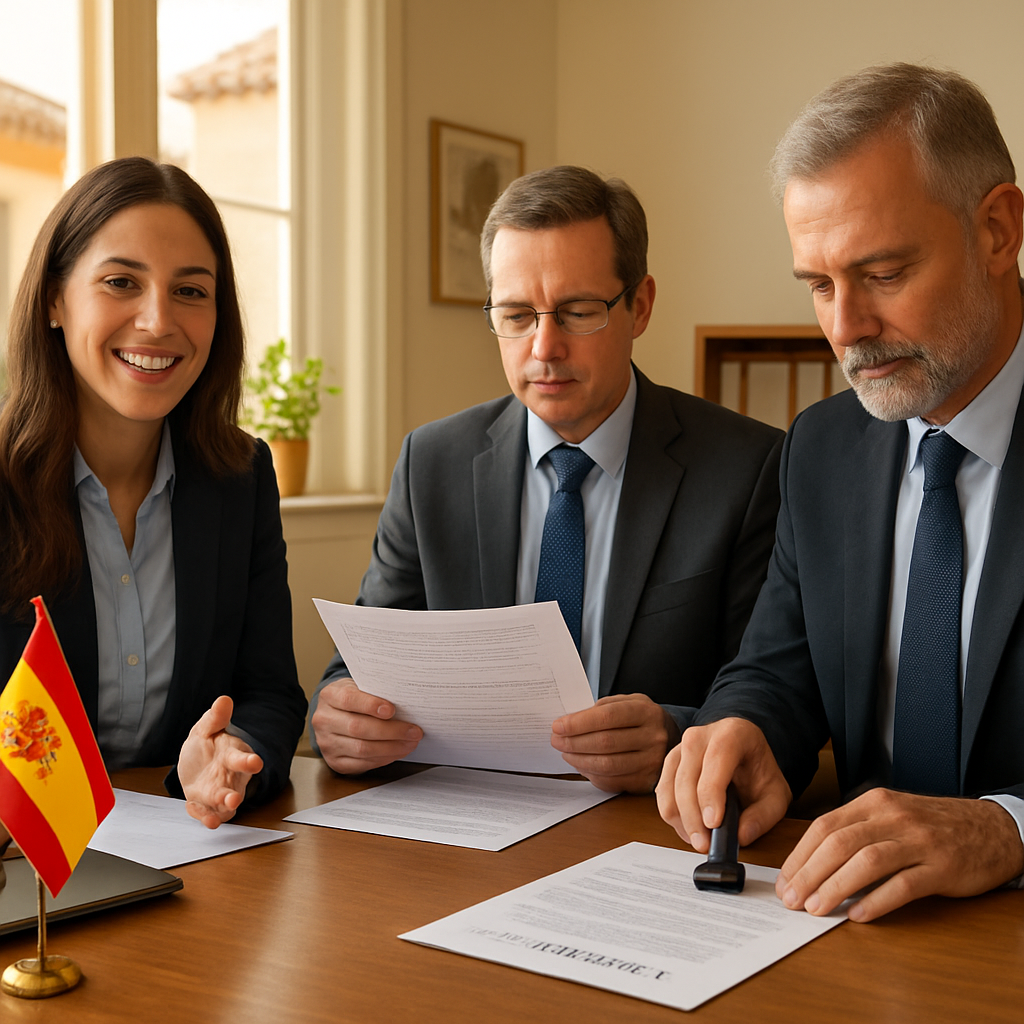 Step 5: Complete the Purchase and Post‑Buy Checklist
So you’ve got the deed in hand, the notary’s seal is still warm, and the keys are about to jingle in your palm. That moment feels like the finish line, but there’s still a short sprint to cross before you can truly call the place yours.
First, breathe. You’ve already navigated the budget, the region, the legal maze, and the team of agents, lawyers, and notaries. Now it’s about locking everything down, double‑checking the details, and setting yourself up for a smooth life on the Costa del Sol.
The notary will read the escritura de compraventa line by line. This is where you pay the remaining balance – usually the last 90 % – and the notary records the transfer in the Land Registry. Bring your passport, NIE, proof of funds, and any mortgage approval letters. The notary will also collect the notary fee (about 0.5 % of the price) and the registration fee.
Tip: ask for a “copia simple” right then. It’s a cheap printed copy you can stash in a fire‑proof safe and use later for bank accounts or tax filings.
After the signing, you should have:
Store a digital scan on a cloud service and keep a hard copy in a safe place. Trust me, you’ll thank yourself when a Spanish bank asks for proof of ownership.
Within a month of the deed, you need to register for the annual property tax (IBI). The local ayuntamiento will send you the first bill. Paying on time avoids late‑fee penalties and keeps your record clean for future resale.
If you plan to rent the unit, you’ll also have to register as a landlord with the tax office and obtain a rental license if the municipality requires one.
Contact the water, electricity, and gas providers – often the same company handles all three in many towns. Provide the copia simple and your NIE; most companies will set up an account within a few days.
For community‑managed buildings, pay the first month’s community fee and ask for a copy of the community’s bylaws. Knowing the rules upfront saves you from surprise fines later (like “no BBQ on balconies”).
A local account makes it painless to pay IBI, community fees, and any future mortgage instalments. It also smooths out currency conversion – you can use Wise or a local bank’s euro‑to‑dollar service for better rates.
Remember the Form 8938 and FBAR deadlines. Keep every receipt from the purchase – notary, registration, lawyer, and agent fees – because you can claim them as foreign‑tax credit on your US return. It’s a small step that can shave off hundreds of dollars from your tax bill.
Even if the property looks perfect, do a quick inspection after you get the keys. Check for any leaks, broken fixtures, or missing inventory that the seller might have promised. Note anything in writing and share it with your lawyer – they can negotiate a small repair credit before the escrow fully closes.
These tiny actions turn a house into a home faster than any renovation.
If you’re still in the early stage of a new purchase, remember that a reservation contract (often 1‑5 % of the price) can lock the seller out of the market while you do your due diligence. It’s not mandatory, but it gives you a safety net – and if the seller backs out, they owe you double the amount you paid according to Balcells Group’s guide.
Bottom line: the purchase is the climax, but the post‑buy checklist is the epilogue that guarantees a stress‑free start to your Spanish life. Follow these steps, keep everything organized, and you’ll be sipping café con leche on your balcony before you know it.
The very first step is to get your Spanish NIE (Número de Identificación de Extranjero). Think of it as your tax‑ID passport for everything from opening a bank account to signing the deed. You can apply at a Spanish consulate in the U.S. or have a gestor handle it for you – the process usually takes one to two weeks and costs around €60‑€80. Without the NIE, you’ll hit a wall at the notary.
Both options are possible, but they work very differently. A U.S. home‑equity loan lets you pull cash and transfer it abroad, which can be quicker but exposes you to two separate repayment schedules and currency risk. Spanish banks do lend to non‑residents, typically requiring a 30‑40 % down‑payment and offering rates that hover around 2.9 % in late 2024. Compare total cost, conversion fees, and how comfortable you are managing two mortgage statements before deciding.
Expect to pay roughly 10 %‑12 % of the property’s price in upfront taxes and fees. For resale homes you’ll face the Transfer Tax (ITP), which is 6 %‑10 % depending on the region – Andalusia, for example, sits at 8 % up to €400,000. New builds add 10 % VAT plus about 1.5 %‑1.8 % stamp duty (AJD). Then add notary (≈0.5 %), registration (≈€200‑€300) and solicitor fees (≈1 %). A €250,000 apartment will likely need an extra €30,000‑€35,000.
Opening a local account is almost mandatory for paying the annual IBI tax, community fees, and any mortgage instalments. It also smooths currency conversion because you can transfer euros directly instead of using a U.S. bank’s cross‑border service. Once you have your NIE, swing by a bank with your passport and a copy of the “copia simple” of the deed. Many buyers set it up right after the notary signing to avoid a scramble later.
After the escritura, collect the original deed, the “copia simple,” proof of payment for ITP or VAT, the notary receipt, the community debt certificate, EPC and habitability certificates. Store digital scans in the cloud and hard copies in a safe. You’ll need every receipt to claim the foreign‑tax credit on your U.S. return and to satisfy FBAR and Form 8938 reporting. Missing a single document can cost you hundreds of dollars in missed credits.
A diligent bilingual solicitor will run a title search and ask the seller for a recent community debt statement. If the building owes money, the seller must settle it before the deed is recorded, or you can negotiate a price reduction. Always request the latest “certificado de deudas de la comunidad” and double‑check the homeowner’s association bylaws for any upcoming special assessments.
A reservation contract (usually 1 %‑5 % of the price) locks the seller out while you do due diligence – think of it as a safety net. If the seller backs out, they typically owe you double the amount you paid. It’s not mandatory, but many American buyers use it to secure a prime Marbella unit while they line up financing and the NIE. Just make sure the contract spells out the refund conditions clearly.
So there you have it – a clear roadmap for how to buy property in Spain as an American, from securing your NIE to handing over the keys.
Remember, the biggest wins come from staying organized: keep every receipt, get a copia simple of the deed, and double‑check community debt statements before you sign.
It’s normal to feel a little nervous when you’re juggling Spanish taxes, U.S. reporting, and a foreign mortgage. The good news? A bilingual solicitor and a local agent who know the ins and outs can turn that anxiety into confidence.
When you compare regions, match the vibe to your lifestyle – a beachfront villa for sun‑seeking retirees or a city flat for a work‑related move. And don’t forget the little post‑buy tasks: register for IBI, set up utilities, and change the locks.
What’s the next step? Grab that checklist, reach out to a trusted local professional, and start penciling in a viewing. A quick call with Sunny Coast Homes can give you the market insights you need to move forward.
In the end, buying a Spanish home isn’t just a transaction; it’s the beginning of a new chapter. Stay curious, stay diligent, and soon you’ll be sipping café con leche on your own Mediterranean balcony.