Imagine you’re scrolling through endless pictures of sun‑kissed balconies in Marbella, and suddenly the thought hits you: could you actually own that slice of paradise?
That moment of excitement is what every foreign buyer feels, but the reality of a mortgage in Spain for foreigners can seem like a maze of paperwork, exchange rates, and unfamiliar banks.
You’re not alone. Many Europeans—whether from Belgium, the Netherlands, or the UK—have taken the leap, and they’ve learned a few tricks that turn uncertainty into confidence.
First, let’s demystify the biggest myth: you don’t need to be a Spanish resident to qualify for a loan. Most Spanish banks are happy to lend up to 70 % of the property value to non‑residents, as long as you can prove steady income and a clean credit history.
So, what does that actually look like on the ground? Picture a sunny afternoon in Benalmádena, sitting with a loan officer who asks for your passport, proof of income, and a NIE number—your foreigner tax ID. Once that’s in place, the bank runs a quick assessment and gives you a pre‑approval that feels almost as exciting as finding the perfect apartment.
But there are a few hiccups to watch out for. Interest rates can swing higher for foreign borrowers, and you’ll need to budget an extra 6–10 % of the purchase price for taxes, notary fees, and registration. Think of it as the hidden cost of turning a holiday home into a real home.
And here’s a tip that saved many first‑time buyers a lot of stress—lock in a fixed‑rate mortgage early, especially if you’re coming from a country with a weaker euro. It protects you from sudden spikes and gives you a predictable monthly payment.
Now that you’ve got the big picture, you might be wondering how to actually start the process. The answer is simpler than you think—gather your documents, get your NIE, and reach out to a local specialist who can guide you through each step.
We’ll walk you through everything from choosing the right bank to understanding repayment schedules, so you can move from day‑dreaming to holding the keys in your hand.
Ready to turn that dream into a deed? Let’s dive in and explore the exact steps you need to secure a mortgage in Spain as a foreigner.
Getting a mortgage in Spain is doable: banks lend up to 70 % of property value if you have steady income, a NIE, and the right paperwork.
Gather your documents, lock in a fixed rate early, and let a specialist guide you to move from dreaming to holding the keys today.
First thing’s first – you need to know if you’re even in the game. A mortgage in Spain for foreigners isn’t a secret club, but the door does have a few locks you have to pick.
Do you have a steady income that the bank can verify? A solid credit history back home? And, crucially, a Spanish NIE (Número de Identificación de Extranjero). Without the NIE, the paperwork stalls faster than traffic on the Costa del Sol in summer.
Most Spanish banks will lend up to 70 % of the property’s appraised value to non‑residents, as long as you can prove you earn enough to cover the monthly payment plus the extra 30 % you’ll need for taxes and fees.
That means a salary of roughly €2,500–€3,000 per month for a €200,000 loan, give or take. If you’re self‑employed, you’ll need at least two years of tax returns and a bank statement that shows consistent deposits.
Here’s the typical checklist – think of it as a travel packing list, but for numbers:
And don’t forget to bring translations if any of those documents are not in Spanish. A certified translation can save you days of back‑and‑forth with the lender.
Different banks have slightly different rules. Some will ask for a larger down‑payment if you’re from a country with a weaker currency, while others are more flexible if you have a Spanish bank account already.
It helps to ask yourself: do I want a fixed‑rate or variable‑rate mortgage? Fixed rates give you peace of mind – especially if you’re coming from a place where the euro might swing. Variable rates can be cheaper initially but could jump if the European Central Bank changes its policy.
One tip that many expats overlook: ask the bank about a “mortgage guarantee” or “insurance” that can lower the interest rate for foreign borrowers. It’s a small extra cost that can shave a few points off your APR.
If the paperwork feels overwhelming, consider a document‑checking service like TradingDocs.AI. Their AI‑driven platform can scan your files and flag any missing pieces before you hand them to the bank, cutting down the back‑and‑forth.
And while you’re getting comfortable with Spanish legal lingo, why not brush up on the language itself? A quick lesson on ChickyTutor can give you the confidence to chat with your loan officer without relying on a translator.
Finally, remember to keep a digital backup of everything – a cloud folder labeled “Spain Mortgage” can be a lifesaver if you need to resend a document on short notice.

Once you’ve crossed off every item on the checklist, you’re ready to request a pre‑approval. That’s the green light that tells sellers you’re serious and gives you a realistic budget to work with.
So, take a deep breath, pull those papers together, and let the process start moving. The next step will be choosing the right bank and locking in a rate that works for you.
Let’s be honest: the single biggest decision isn’t the bank, it’s the type of mortgage you pick.
Fixed-rate keeps your monthly payment stable for the term. Variable (or tracker) follows a benchmark and can dip or spike with euro-area rates.
There are hybrids too — part fixed, part variable — and specialised loans that bundle renovation or energy upgrades into the mortgage.
Why does this matter for a foreign buyer? Because currency swings, residency plans, and rental intentions change the risk you’re willing to take.
If you want predictability — especially if you’re paying from non-euro income — lean fixed.
If you plan to sell within 5–7 years and want a cheaper starting rate, a variable tracker might save you money…until it doesn’t.
Ask the bank for two calculations: your monthly payment at today’s rate, and a stress test at a rate 2–3 percentage points higher. If the higher number breaks your budget, choose stability.
Not every loan is a simple 30-year fixed. Here are types you’ll see in Spain and should ask about:
Want evidence that lenders bundle renovation financing? Look at how mortgage providers describe financing for home improvements and energy upgrades when comparing product features.
Does that sound right for your plan?
Ask yourself: will you become a Spanish resident? Will you keep the property as a holiday home? Will you rent it out long-term?
Shorter term = higher payments but less interest overall. Longer term = lower payments, more interest, and greater exposure to rate changes.
Practical step: sketch a 5‑ and 10‑year cashflow plan. If rent or savings cover payments in the worst-case scenario, you can consider riskier, cheaper options.
1) Decide your risk tolerance: stability or lowest initial rate.
2) Request illustrations: fixed and variable scenarios, and a stress-test at +2%.
3) Ask about fees: arrangement, early repayment penalties, appraisal, and valuation costs.
4) Compare effective cost (APR) not just headline rate.
5) If you need renovation finance, ask the lender whether they offer combined mortgages or staged draws — it saves re-mortgaging later. For examples of loan types that include renovation and energy-efficiency options, review lender product overviews on mortgage product pages.
Don’t pick on emotion. Run the numbers, stress-test them, then pick a product that fits the worst-case you can live with.
Need a second opinion? A bilingual mortgage broker can translate offers, but insist on written cost comparisons before you sign anything.
Explore mortgage products that include financing for home improvements and energy upgrades for ideas on how lenders package different options.
Okay, you’ve narrowed down a couple of lenders and you’ve got a rough idea of the monthly payment. Now the real fun begins – digging into the numbers so you’re not surprised later.
First thing I always ask my clients: do you feel more comfortable knowing exactly what you’ll pay every month, or are you okay with a little uncertainty for a potentially lower rate? It’s a simple question, but it flips the whole comparison on its head.
Most banks will shout a “3.2% fixed” or a “2.9% variable” right at the top of the offer. That’s the headline rate, but the story lives in the APR – the annual percentage rate that folds in arrangement fees, valuation costs, and any early‑repayment penalties.
For a foreign buyer, those hidden fees can be a bigger bite than the spread between fixed and variable. A 0.5% arrangement fee on a €200,000 loan adds €1,000 up front, which you’ll feel in the cash‑flow test later.
Take a sheet of paper (or a spreadsheet) and line up the key figures. Below is a quick table you can copy‑paste into Excel – it forces you to compare apples to apples.
| Feature | Fixed‑Rate Example | Variable‑Rate Example | Notes |
|---|---|---|---|
| Headline rate | 3.2% (25‑year term) | 2.9% (Euribor‑linked) | Fixed stays the same; variable can move up or down. |
| APR (incl. fees) | 3.45% | 3.30% | APR is the true cost; lower is better. |
| Early‑repayment penalty | 1% of outstanding balance | None (often) | Important if you plan to sell or refinance. |
Plug in your own numbers and see which line gives you a payment you can actually live with, even if rates jump 1–2 points.
Ask each lender for a “+2% scenario.” That’s the same as saying, “What if the Euribor spikes by two percentage points?” If the variable scenario still fits under your budget, you might be comfortable with the lower headline rate.
But if the stress‑test blows your cash‑flow, lock in the fixed rate – even if it costs a few euros more each month. Remember, the goal is to survive the worst‑case, not just the best‑case.
Look for these red flags:
Those details can turn a seemingly great rate into a costly nightmare.
When I helped a Dutch couple compare two offers last spring, the fixed‑rate lender quoted 3.25% with a 0.6% arrangement fee, while the variable lender showed 2.85% with no upfront fee. Their stress‑test at +2% pushed the variable monthly payment above €1,200, which was beyond what they could afford on their rental income. The fixed option, though a touch pricier, gave them peace of mind and they sealed the deal.
That little side‑by‑side table saved them from a future cash‑flow shock – and it’s the same principle you can apply.
Once you’ve ticked those boxes, you’ll have a crystal‑clear picture of which mortgage in Spain for foreigners actually matches your risk appetite and budget.
Need the latest numbers to feed your calculator? the 2025 Spanish mortgage rate overview breaks down average fixed and variable rates, plus APR trends for non‑resident borrowers.
Alright, you’ve narrowed down the bank and you’ve got a rate that looks decent on paper. The next hurdle is turning that promise into actual cash – and making sure the tax side doesn’t bite you later.
First thing’s first: talk to your bank about a pre‑approval. It’s like a friendly “yes, we can” that lets you shop with confidence. Ask for two scenarios – the rate you see today and a stress‑test at +2 % to see how your payment would look if the Euribor jumps.
Most Spanish lenders will fund up to 70 % of the purchase price for non‑residents, but they’ll also look at your age. Many banks want the loan fully repaid by the time you hit 75, so factor that into your repayment horizon.
Do you have a stable income stream in euros, or are you converting dollars or pounds each month? If the latter, ask the lender about currency‑conversion fees – they can add up quickly and shrink the amount you actually walk away with.
And here’s a little secret: opening a Spanish bank account the moment you get your NIE can shave days off the approval timeline. The bank can pull your salary straight into the account, which makes the income verification process a breeze.
Now, let’s talk taxes. If you’re a U.S. citizen, you’ll still have to file a U.S. tax return reporting the Spanish property, plus any rental income you earn. The U.S.–Spain tax treaty helps avoid double‑taxation, but you’ll need to claim foreign tax credits on Form 1116 or use the Foreign Earned Income Exclusion where it applies.
For non‑resident buyers, Spain only taxes income generated here – that means rental profits and capital gains when you sell. Capital gains on a non‑resident sale are taxed at a flat 24 % and the buyer must withhold 3 % at closing as an advance payment.
Don’t forget the one‑time costs: transfer tax (6‑10 % depending on the region), notary fees (roughly 0.5‑1 %), registration fees, and a 1 % stamp duty on new builds. Those fees aren’t part of the mortgage, so you’ll need extra cash on hand.
Need a quick rundown of what you’ll owe as a U.S. expat? tax guidance for U.S. expats walks you through filing deadlines, FBAR thresholds, and how the treaty can lower your overall tax bill.
Grab a notebook and tick these boxes – it’s the easiest way to keep the process from feeling like a maze.
Once those items are green, ask the lender for a written loan offer that lists every fee, the APR, and the exact repayment schedule. Compare that side‑by‑side with any other offers you’ve gathered – the lowest headline rate isn’t always the cheapest deal.
And remember: financing and taxes are two sides of the same coin. A solid financing plan without a tax strategy can leave you scrambling for cash when the first tax bill arrives. Conversely, a perfect tax plan won’t matter if you can’t get the loan approved.
Take a breath, run the numbers, and you’ll walk into the signing ceremony feeling like you’ve got this under control.
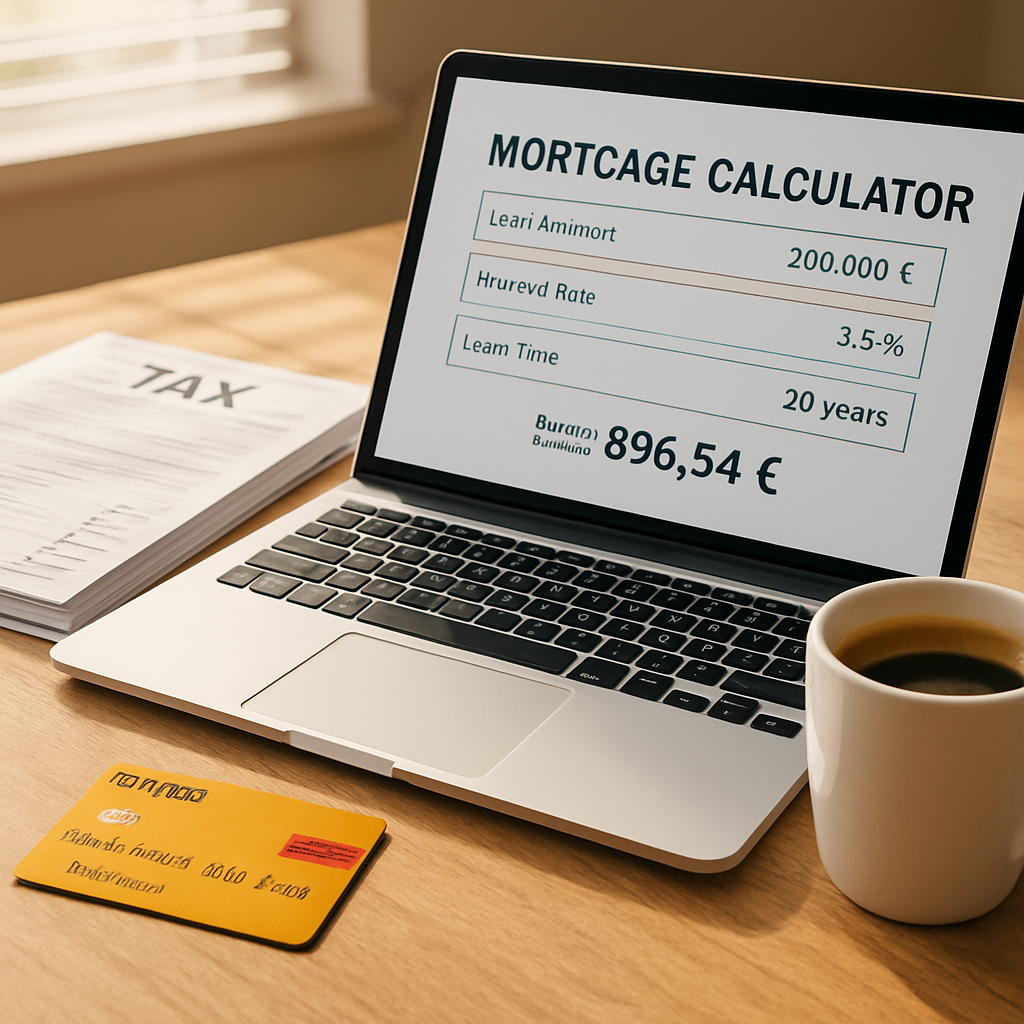
Before you even step into the notary’s office, double‑check that every document is signed, stamped and translated.
That means the signed purchase agreement, the bank’s loan offer (with APR, fees and repayment schedule), your NIE, and the property’s cadastral extract.
Do you have a tidy PDF folder labeled “01‑Purchase‑Agreement.pdf”, “02‑Loan‑Offer.pdf”, and so on? If not, create one now – it will save you days of back‑and‑forth with the bank.
On the day of signing, the bank will hand you a multi‑page contract that looks like a novel.
Take a breath, read each clause out loud, and ask the loan officer to explain anything that feels fuzzy.
Pay special attention to the early‑repayment penalty clause; a 1 % charge can bite you hard if you decide to sell the property before the loan term ends.
Once you sign, the bank will transfer the funds to the seller’s account – usually within 24‑48 hours.
Now that the money is moving, you need a reliable way to move yours.
Open a Spanish bank account (if you haven’t already) and link it to the mortgage’s IBAN.
Set up a standing order for the exact monthly amount – that way you never miss a payment, and the bank can’t claim a missed‑payment fee.
Consider a dual‑currency account if your income arrives in euros, dollars or pounds; it can shave a few euros off conversion fees each month.
It’s tempting to think the loan amount plus the 6‑10 % tax buffer is all you owe, but there are a few sneaky fees that show up later.
First, the notary’s fee is usually 0.5‑1 % of the purchase price and is paid at closing – make sure you have cash on hand.
Second, the land registry charges a small registration fee; it’s not huge, but it’s a line item you don’t want to forget.
Third, if you ever decide to refinance or pay off the loan early, the bank may levy an “early‑repayment” fee – ask for the exact percentage now so you can factor it into future calculations.
Here’s a quick checklist you can print and keep on your kitchen fridge:
And a final thought: treat your mortgage like a living thing. Check the balance every few months, watch the interest rate news, and ask your Spanish‑speaking mortgage broker for a “rate‑review” once a year. That habit can catch a rate‑drop or a fee change before it hurts your budget.
When you walk out of the signing ceremony with the deed in hand, you’ll feel the mix of excitement and relief that comes from having turned a dream into a legal reality. Keep these steps close, stay on top of the numbers, and you’ll manage your mortgage in Spain for foreigners with confidence for years to come.
Short answer: no. Most banks will lend to you even if you only have a tourist visa or a short‑term work permit, as long as you can prove steady income, a clean credit record at home, and you have your NIE number. The trick is to show the lender that you’re financially reliable – a bank‑statement, tax returns and a solid employment contract usually do the job. If you’re still unsure, ask the bank for a pre‑approval so you can see exactly what they need.
Expect a passport copy, your NIE, recent payslips or tax returns (two years if you’re self‑employed), bank statements from the last three months, a credit report from your home country, and details about the property you want to buy. Every non‑Spanish paper must be translated by a sworn translator and apostilled, otherwise the file gets sent back. Having everything in a tidy PDF folder (01‑Passport.pdf, 02‑NIE.pdf, etc.) speeds the process up dramatically.
Spanish banks typically finance up to 70 % of the purchase price for non‑residents, which means you’ll need to cover the remaining 30 % out of pocket. In practice, many lenders ask for a 35‑40 % cash reserve because they also want you to have enough left over for taxes, notary fees and a small emergency fund. Run a quick calculation: if the house costs €250,000, you might need €75,000‑€100,000 ready – the loan would be around €175,000.
Generally yes, but the gap isn’t huge. Banks see the extra paperwork and currency risk, so they add a modest premium – often 0.2‑0.5 % above the rate offered to residents. The bigger difference comes from fees: arrangement fees, appraisal costs and early‑repayment penalties can add up. That’s why you should compare the APR, not just the headline rate, to see the true cost of the mortgage.
Besides the mortgage itself, expect to pay transfer tax (6‑10 % depending on the region), notary fees (about 0.5‑1 % of the price), registration fees and a 1 % stamp duty on new builds. Don’t forget the annual property tax (IBI) and, if you plan to rent, Spanish rental tax on the net income. A safe rule of thumb is to set aside an extra 8‑12 % of the purchase price for all of these one‑off costs.
Yes, you can set up a Spanish bank account once you have your NIE and then schedule automatic euro debits. If your income arrives in pounds, dollars or another currency, look for a dual‑currency account or a low‑fee transfer service to keep conversion costs down. Even a 1‑2 % exchange margin can shave a few hundred euros off each year, so shop around for the best rate.
Start by asking each lender for a written offer that lists the headline rate, the APR, all fees (arrangement, appraisal, early‑repayment) and the exact repayment schedule. Then run a +2 % stress‑test on any variable product – if the payment still fits your budget, you might be comfortable with a lower starting rate. Finally, put the numbers side by side in a simple spreadsheet; the offer with the lowest total cost over the term is usually the winner.
We’ve walked through everything you need to feel confident about a mortgage in Spain for foreigners – from eligibility and paperwork to picking the right rate and budgeting for taxes.
Remember, the biggest hurdle is often just getting your NIE and a tidy PDF folder together. Once those basics are in place, the banks are surprisingly cooperative, especially when you show steady income and a clear down‑payment plan.
What about the numbers? A quick stress‑test at +2 % on any variable offer, and a side‑by‑side APR comparison, will reveal the true cost before you sign. That habit alone can save you hundreds of euros each year.
And don’t forget the hidden fees – notary, registration, and the 1 % stamp duty on new builds. Setting aside an extra 8–12 % of the purchase price keeps surprises at bay.
So, what’s the next step? Grab your passport, schedule that NIE appointment, and start assembling your document folder. Then reach out to a local specialist who can translate offers and keep the process moving.
Ready to turn that sunny daydream into a deed? Give Sunny Coast Homes a call, and let us guide you through every twist of the mortgage journey.
Your new home awaits, just a few signatures away.